Marionette Lines Treatment in Marylebone, London
Marionette lines — the downturned grooves running from the corners of the mouth toward the chin — usually require a combination of volume restoration and muscle relaxation to resolve.
Book Consultation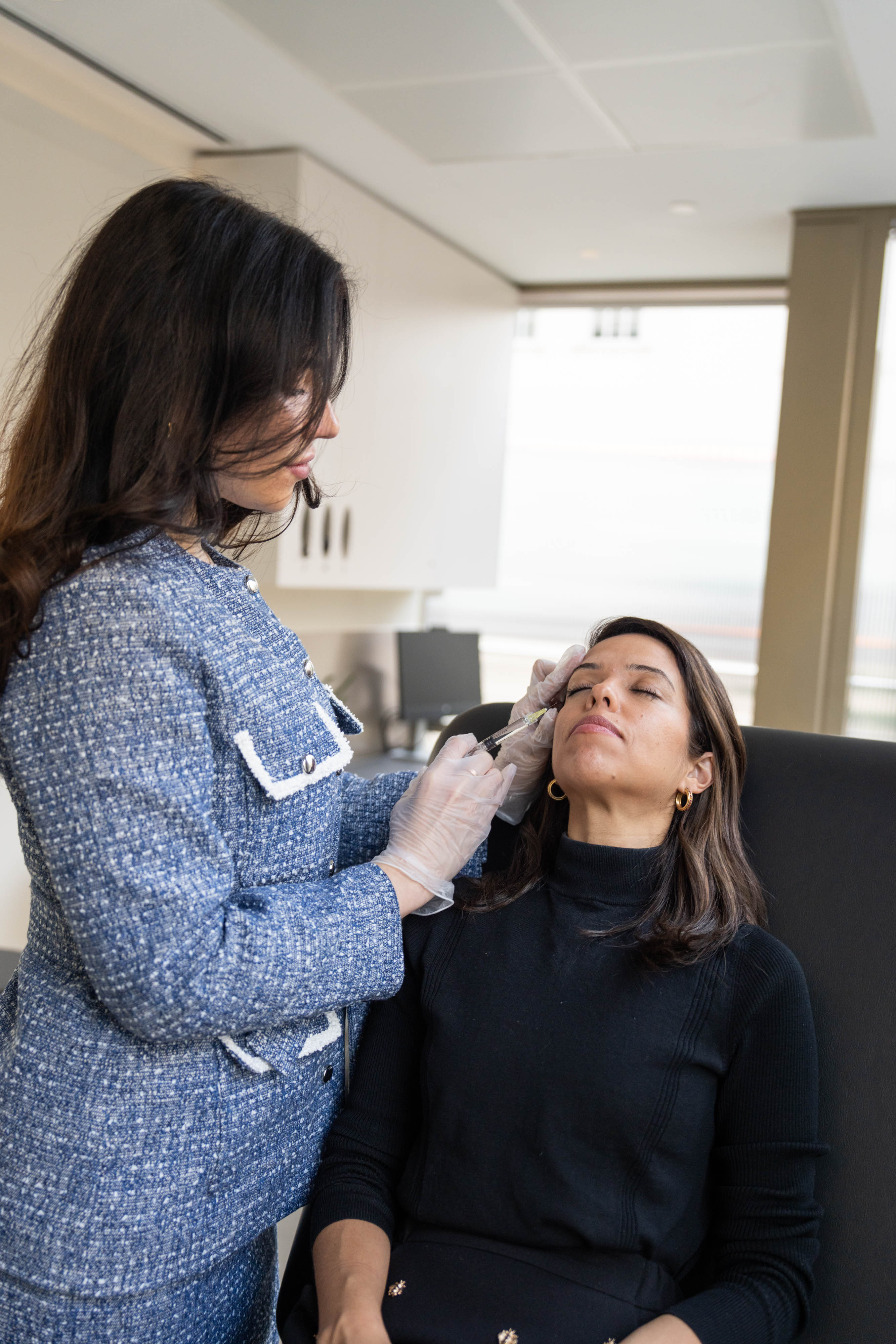
Marionette lines are the vertical grooves that run from the corners of the mouth down toward the jawline. They have two overlapping causes: loss of structural support in the lower face (volume loss from the cheeks, mid-face, and jawline that allows the tissue around the mouth to descend), and hyperactivity of the DAO muscle (depressor anguli oris), which actively pulls the corners of the mouth downward and deepens the groove with expression. Patients frequently describe marionette lines as making them look "sad" or "tired" at rest, even when they feel neither.
Effective treatment therefore combines two approaches: dermal filler to restore the lost structural support (usually in the jawline, chin, and sometimes directly into the line itself) and a small dose of anti-wrinkle toxin into the DAO muscle to stop the active downward pull. Doing one without the other is usually insufficient — filler alone leaves the muscle still deepening the line; toxin alone leaves the tissue still descending. The combined protocol is one of the most transformative interventions in the lower face.
What drives this concern
- Volume loss in the mid-face and jawline from mid-30s onward
- Hyperactive DAO muscle — naturally pulls mouth corners downward
- Loss of mandibular bone height reduces lower-face support
- Photoaging and smoking accelerate collagen breakdown in this area
- Chronic weight loss and gain cycles stretch supporting tissue
Treatment options for marionette lines
Dermal Fillers
From £350Structural support restoration — usually to the jawline, chin, and sometimes directly into the marionette groove. 1 to 2ml of cohesive HA filler per side is typical for a full protocol.
See treatment detail →Anti-Wrinkle Injections
From £250Small dose (2 to 4 units per side) into the DAO muscle to reduce active downward pull on the mouth corners. Essential partner to the filler work.
See treatment detail →Profhilo & Biostimulators
From £550 (starter course)Profhilo improves overall skin quality in the lower face, particularly useful for the perioral and jawline skin that contributes to the marionette appearance.
See treatment detail →FAQ
Common
questions
Can marionette lines be treated with filler alone?
Filler alone often disappoints for marionette lines because the underlying DAO muscle continues to actively pull the corners of the mouth downward, re-creating the groove faster than the filler can fill it. A combined protocol — structural filler to the jawline and chin plus 2 to 4 units of anti-wrinkle toxin to the DAO — delivers dramatically better and longer-lasting results than either treatment alone.
How much filler do I need for marionette lines?
A typical first-time protocol uses 1ml per side split between jawline and chin structural support, plus a small 0.3ml placement directly into the deepest part of the line if needed. Patients with more advanced volume loss sometimes need 2ml per side across the first two visits. Dr Valentina will write the full protocol at consultation so you know the expected total cost before starting.
How long do results last?
Filler in the jawline and chin typically lasts 12 to 18 months. Anti-wrinkle treatment of the DAO lasts 3 to 4 months and is refreshed alongside any other anti-wrinkle treatment you have. Most patients maintain their marionette result with an annual filler top-up plus 3 to 4-monthly anti-wrinkle maintenance.
How much does marionette line treatment cost?
A typical first protocol is £450 for 1ml of jawline filler plus £250 for bilateral DAO anti-wrinkle treatment (total £700 per side if bilateral marionette lines, which is most patients). Additional chin filler if needed is £450 per 1ml. Full written pricing is provided at consultation.
Related Concerns

Get Started
Ready to begin?
Book today.
Dr Valentina Aesthetics • 1 Orchard Street, London W1H 6HJ
Book a SessionAppointments typically available within 1–2 weeks